构建神经网络的两种方式
PyTorch 有两种构建神经网络的方式:
- 简单粗暴式:使用 torch.nn.Sequential 类,初始化时,传入一系列操作 (operation)
- 通用式:定义 torch.nn.Module 的子类
由于涉及的新概念非常多,所以拆分成两个笔记。这里就先了解一下第一种方式。
torch.nn.Sequential
https://pytorch.org/docs/stable/generated/torch.nn.Sequential.html
CLASS torch.nn.Sequential(*args: Module)
CLASS torch.nn.Sequential(arg: OrderedDict[str, Module])
Sequential 的 forward 函数会自动将初始化参数中的 Module (模块)串联起来执行。
前一个 Module 的输出作为下一个 Module 的输入。
def forward(self, input):
	for module in self:
		input = module(input)
	return input
定义方式一
直接通过初始化参数
import torch
import torch. nn as nn
myNeuralNetwork = nn.Sequential(
	nn.Linear(3, 2),
	nn.ReLU(),
	nn.Linear(2, 1),
	nn.Sigmoid())
定义方式二
通过 add_module 添加模块
container = nn.Sequential()
begin_convol_layer = nn.Conv2d(input_channels=2, output_channels=12, kernel_size=2, stride=1, padding=1)
container.add_module("Conv1", begin_convol_layer)
relu1 = nn.ReLU(inplace=False)
container.add_module("Relu1", relu1)
nn.Linear 操作 (operation)
最常见的操作是 nn.Linear()
class torch.nn.Linear(in_features, out_features, bias=True, device=None, dtype=None)
https://pytorch.org/docs/stable/generated/torch.nn.Linear.html
Applies a linear transformation to the incoming data
即,对输入数据进行线性变换。
- in_features (int) – size of each input sample
- out_features (int) – size of each output sample
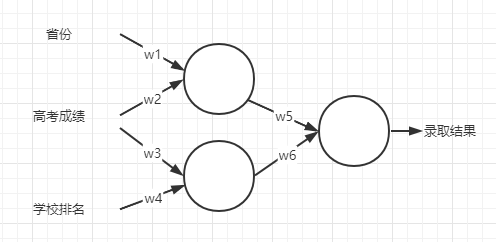
例如,上图中的神经网络中的第一步:
- in_features 为 3
- out_features 为 2
第二步:
- in_features 为 2
- out_features 为 1
Module 与 Model 的区别
- Module 是模块
- Model 是模型
ReLU
全称是 Rectified Linear Unit。
PyTorch 内置了 ReLU:
nn.ReLU()
关于作者 🌱
我是来自山东烟台的一名开发者,有感兴趣的话题,或者软件开发需求,欢迎加微信 zhongwei 聊聊,或者关注我的个人公众号“大象工具”, 查看更多联系方式